The UX Design Challenge is an opportunity for UX Designers to gain practical experience through the process of Design Thinking. An experienced mentor is assigned to a Team of 3-6 to help, encourage and advise through the challenge.
This was an amazing opportunity to apply our knowledge and work together to make something great!
My Role: UX Research & Design, Brand Design, Prototype
Project: UX Team Design Challenge
Duration: 6 weeks, Mar - Apr 2024
Organizer: IterateUX
Tools used: Figma, ChatGPT/Co-pilot, Google Forms & Meet, Zoom
The Problem
The Context
A Quote from Business Insider
https://www.businessinsider.com/the-golden-era-of-streaming-is-over-heres-why-2022-12
The Process
The five stages of Design Thinking:

AI
Empathize
About Amazon Prime video
We learned about Amazon Prime's Video Streaming Service, its revenue sources, and the advertising model in 2024. Understanding these aspects helps us with strategic decision-making and potential implementation.
Description
Video Streaming Service, offered to subscribers of Amazon Prime
Allows users to watch videos and TV shows on demand
Revenue sources
Subscriptions
Advertisements
Digital purchases and rentals
Merchandising
Advertising model
Introduced Ad-supported video-on-demand (AVOD) model in 2024
Users watch advertisements before, during, or after video playback
Service Findings
Amazon's Ineffective, Confusing X-Ray Feature
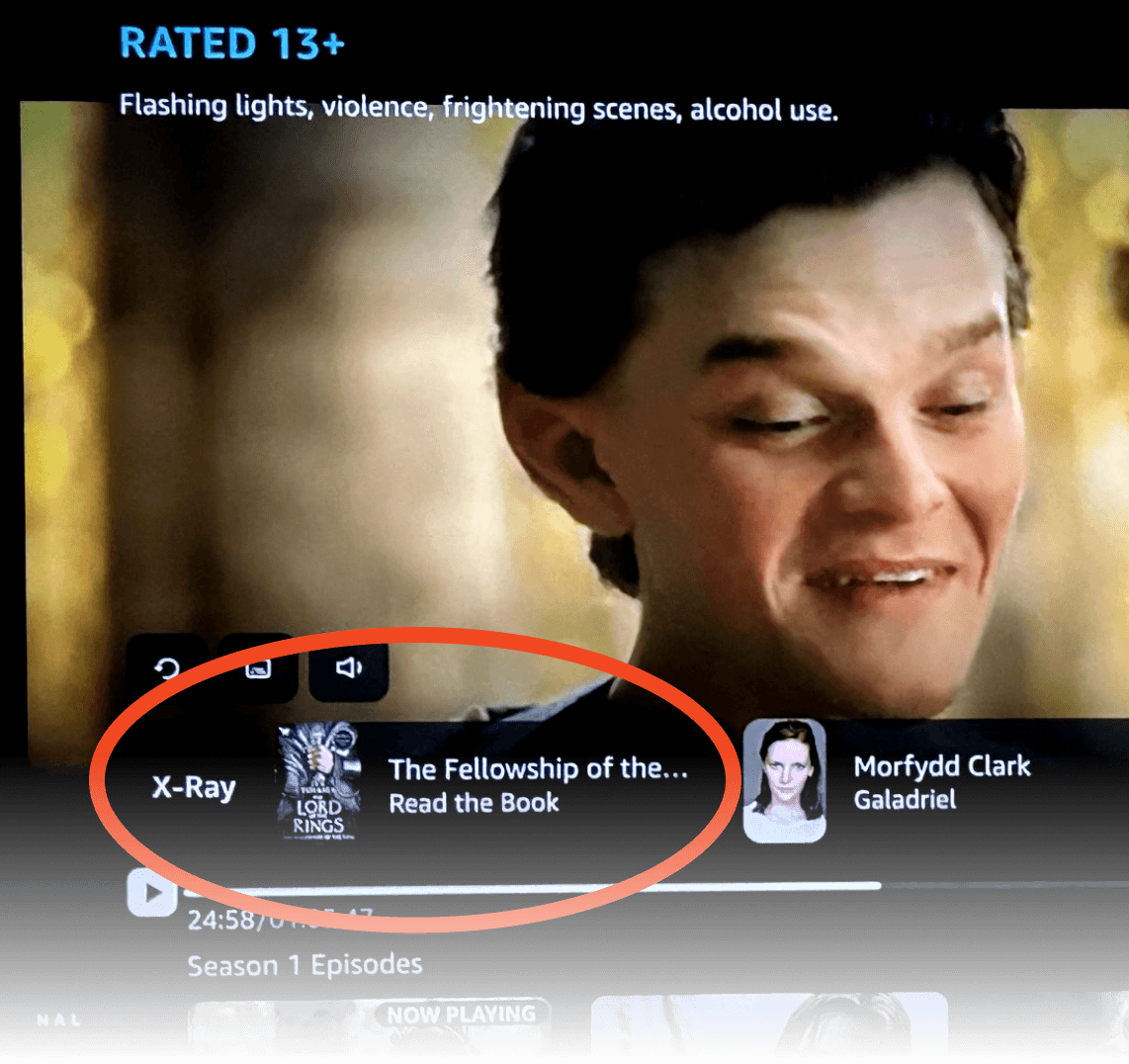
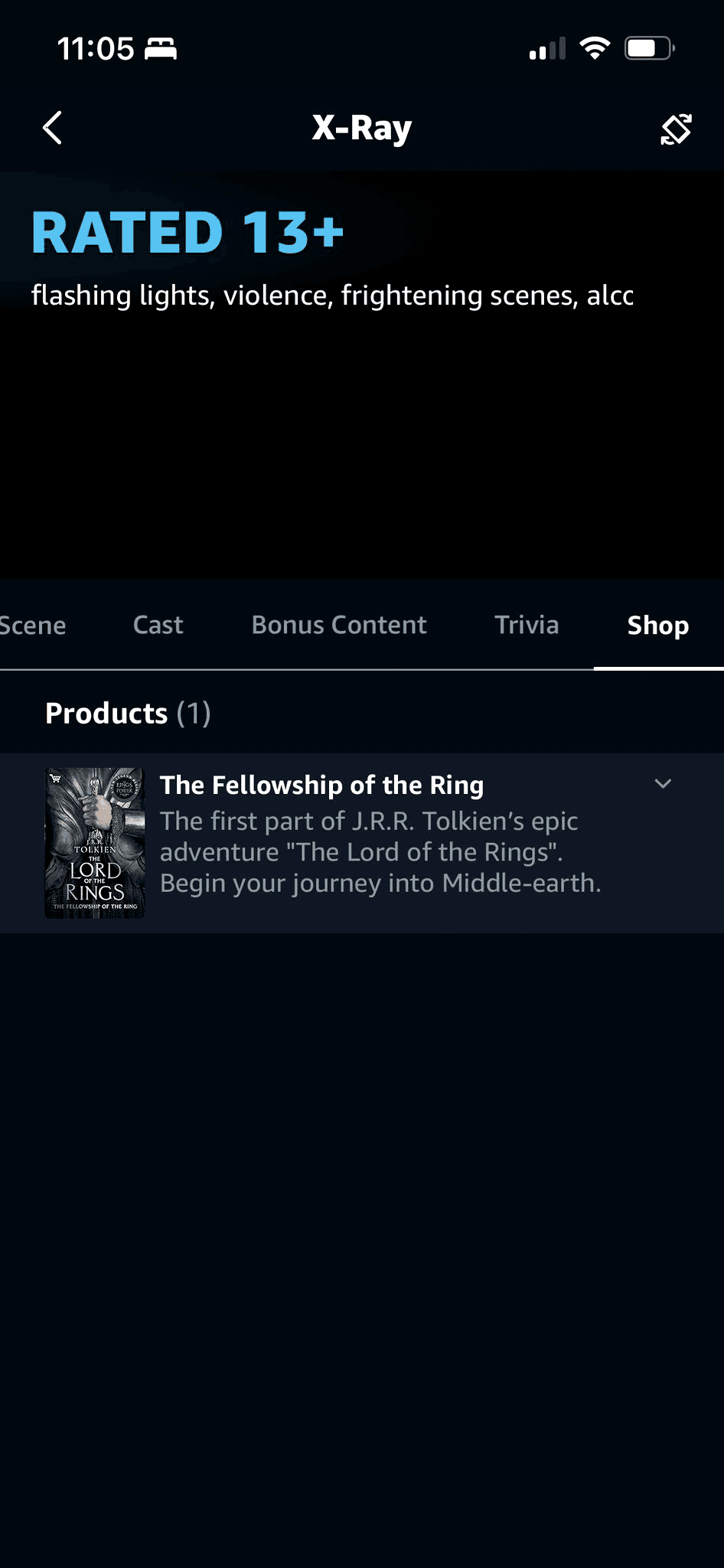
X-Ray is being used to promote products on the TV (left) and the phone (below).
Amazon Prime Video has a feature called X-Ray which integrates facts about a show from the Internet Movie Database (IMDB) which is owned by Amazon. The user can find out information about the show while they watch.
We discovered that:
X-Ray confuses many users and so they mostly ignore it
X-Ray has been enhanced to offer product suggestions while you watch
X-Ray feature contains different options depending on the show being watched, and only sometimes products related to the show are shown.
Example: Buy Lord of the Rings books from The Rings of Power.
On the TV, the book is listed with the actors when the show is paused.
On a phone in landscape mode the merchandise is listed with the actors, and in portrait you have to scroll far right to see the Shop tab.
Questions raised:
Is this feature used?
Do users know it exists?
Do users find it intuitive?
Can it be improved upon?
Assumption Confirmed:
Amazon is using other methods of revenue generation to promote sales from its video streaming platform.
Observations:
This feature is not easily discovered by the user and is not consistently available for all shows. Purchasing requires the user to follow a QR code on the TV or have the app installed.
It's confusing!
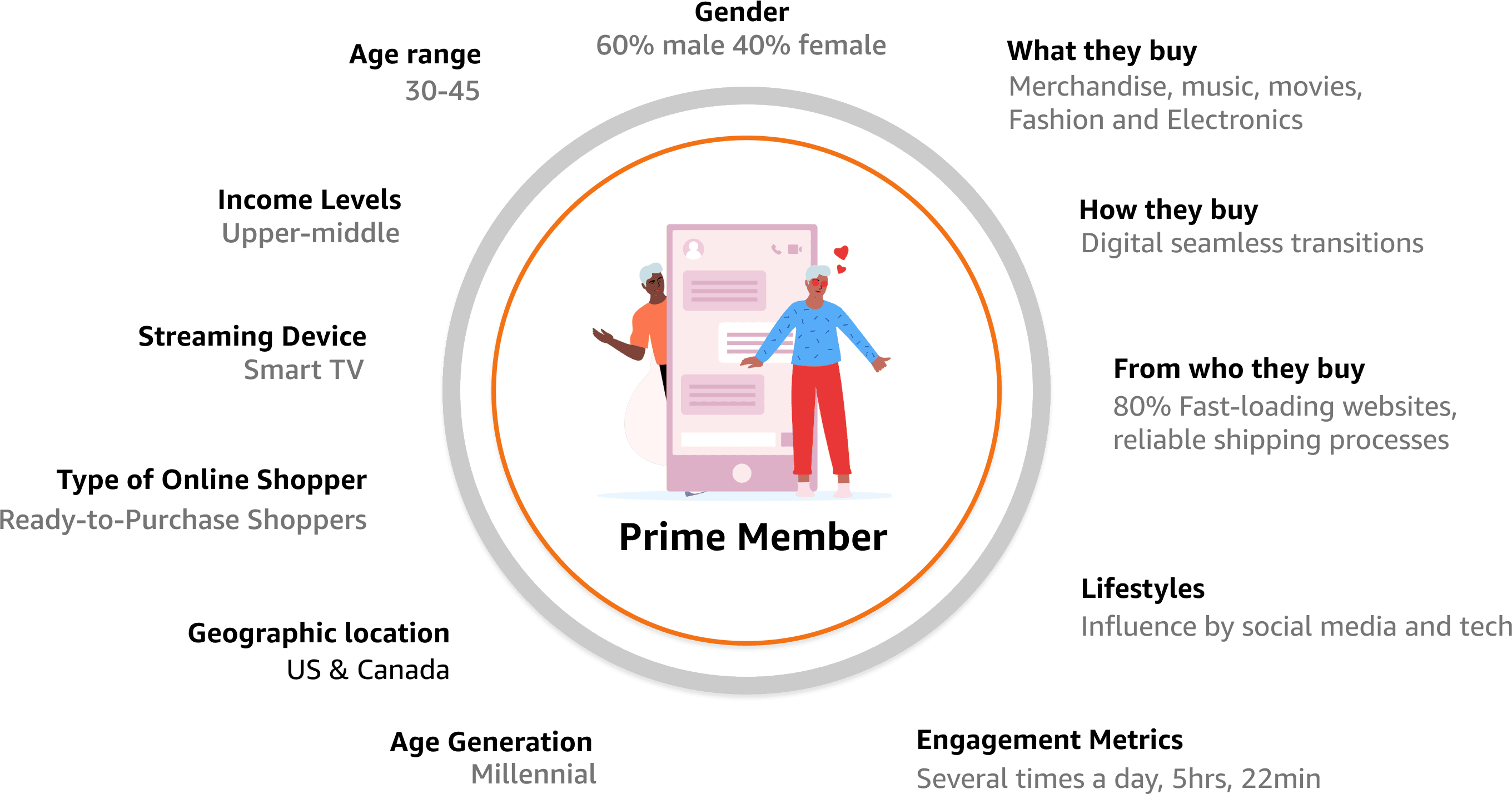
Target Audience
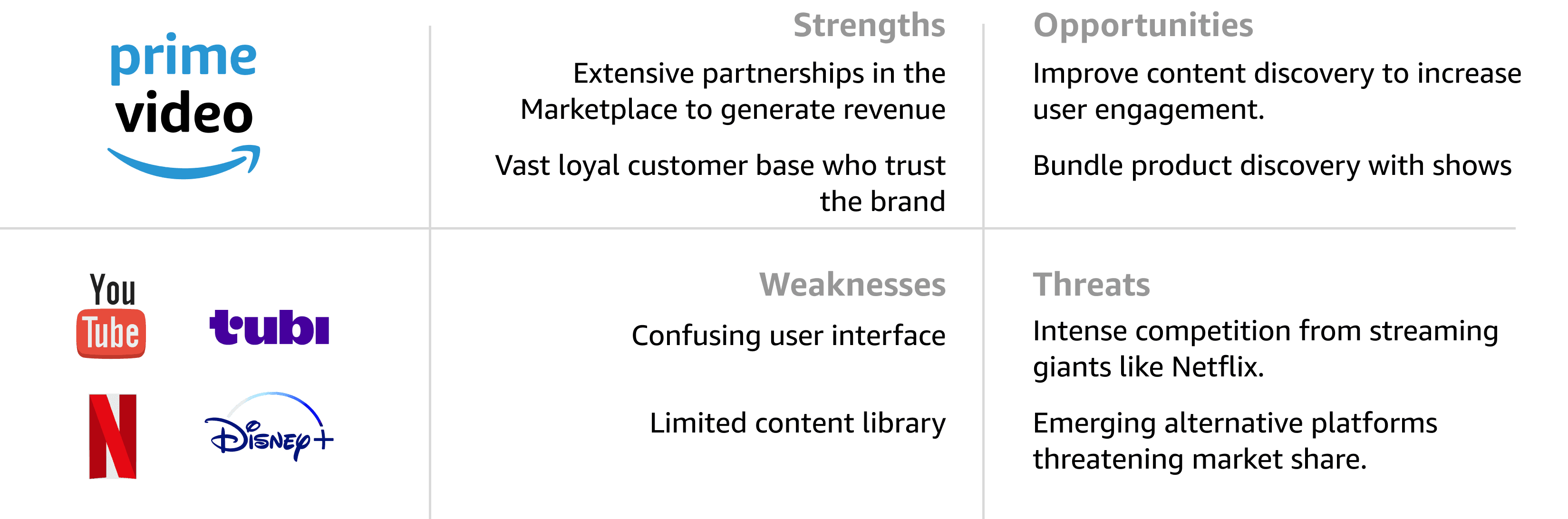
SWOT Analysis
Understanding the strengths and weaknesses, opportunities and strengths, in comparison to the competition will help us identify market gaps and potential.
Value Proposition
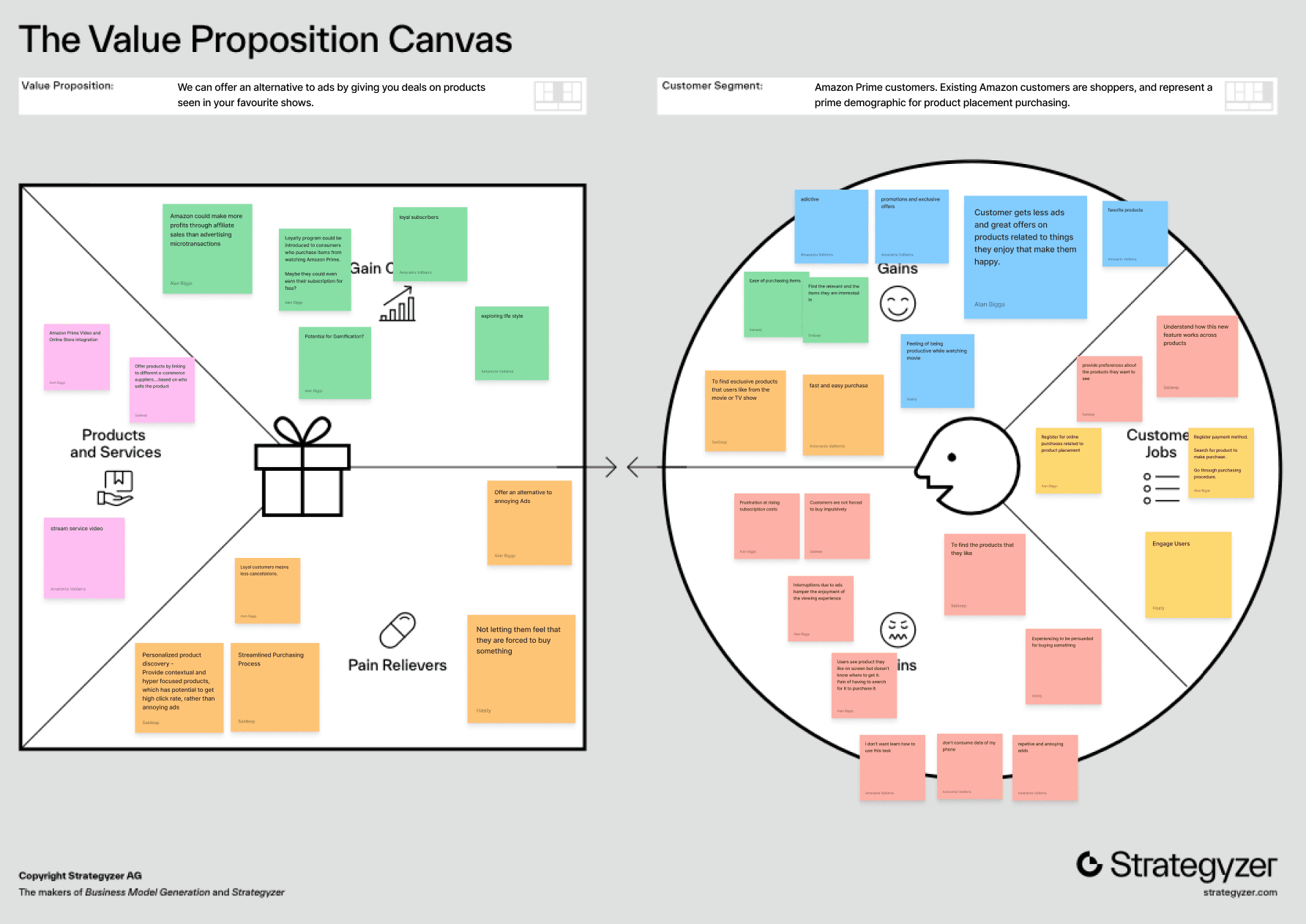
Value to Amazon
Intuitive interface for buying
Increased revenue
Enhance the X-Ray feature
Innovative and inventive
Customer loyalty - human connection
Value to Prime User
New experience to discover products
Non-intrusive
Seamless shopping experience
Exclusive offers in TV shows
Immerse in favorite stories and characters
Define
User Survey
Why a survey?
Knowing that we had a large target audience, we determined that we needed as wide a sample as possible. Surveying users would give us an indication of which demographic groups within the vast Amazon Prime membership pool were best to design a solution for. We would be able to validate our assumptions, discover their pain points and find common issues they face with Amazon Prime and Prime Video services.
Topics to Explore
Demographics, Frequency of Streaming Usage, Ad Tolerance and Preferences.
Participants
26 participants, 10 broad questions, prime members and non-prime members.
Method
We implemented the survey using Google Forms and called for responses from our social media contacts.
Responses
We asked Co-pilot to summarize the results:
AI
AI Response
“Based on the data you provided, the most frustrating causes of user interruption when viewing shows are:
Ads:
Many users expressed frustration with ads, especially those that can’t be skipped. They felt that these interruptions were wasting their time and were particularly annoyed if the ads were unexpected or poorly timed during the show...”
Qualitative
Quantitative
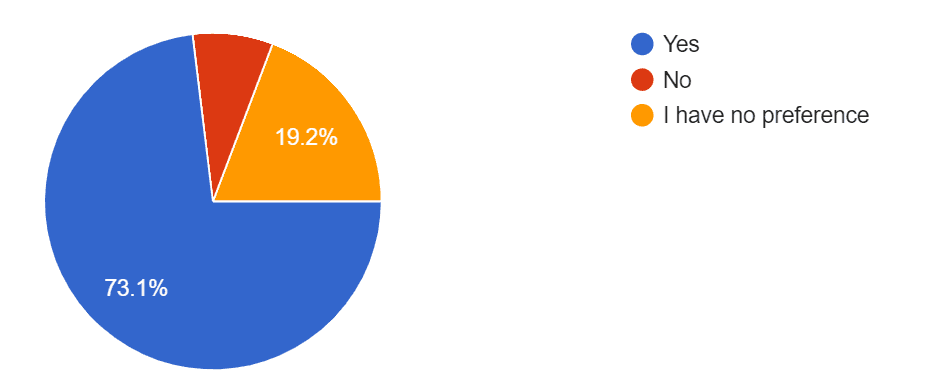
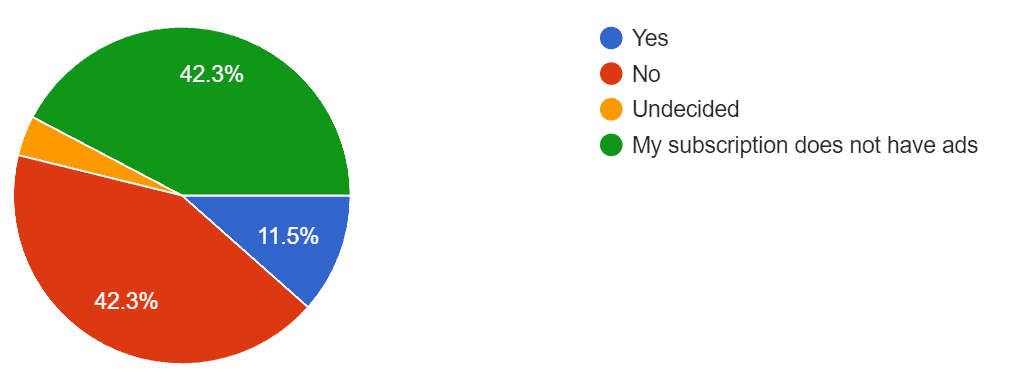
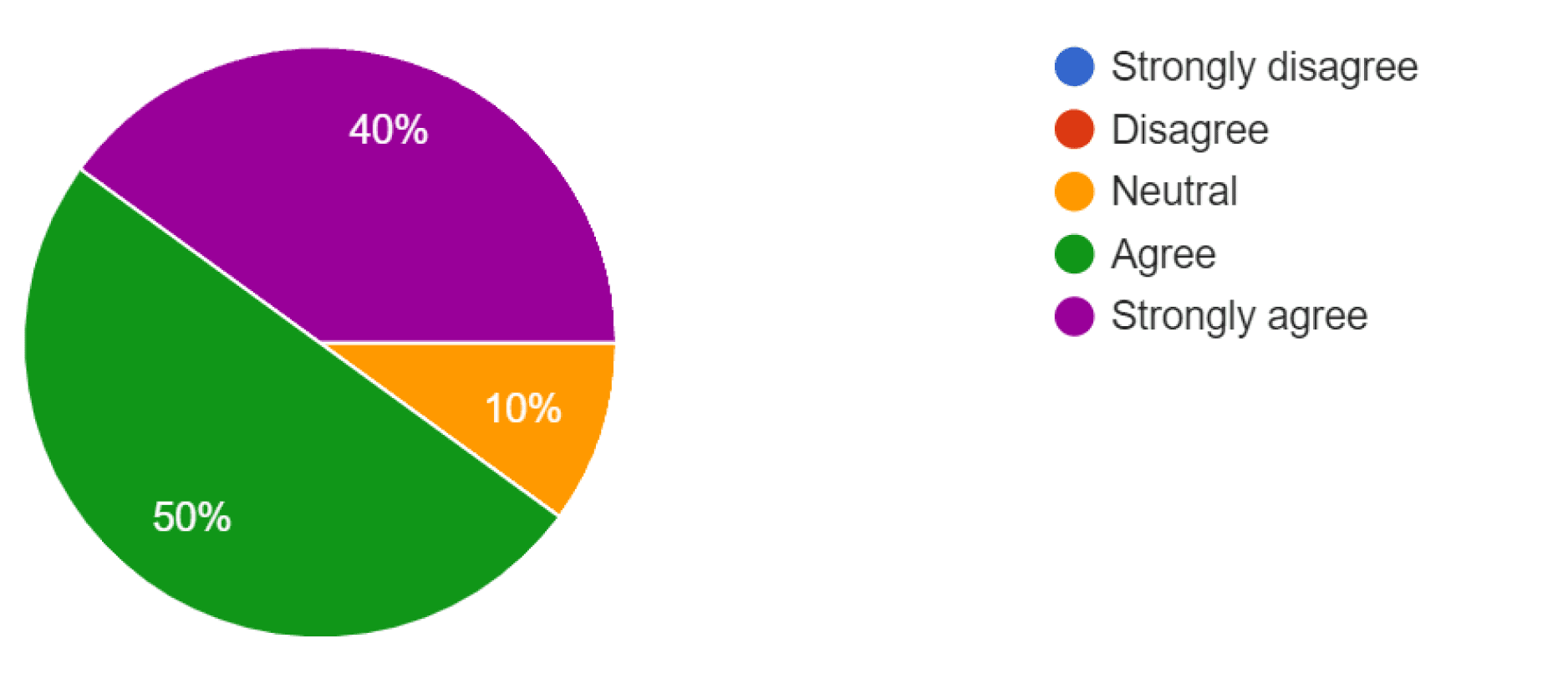
90% of users are less tolerant of ads than they used to be. The rest were neutral.
Empathy Map
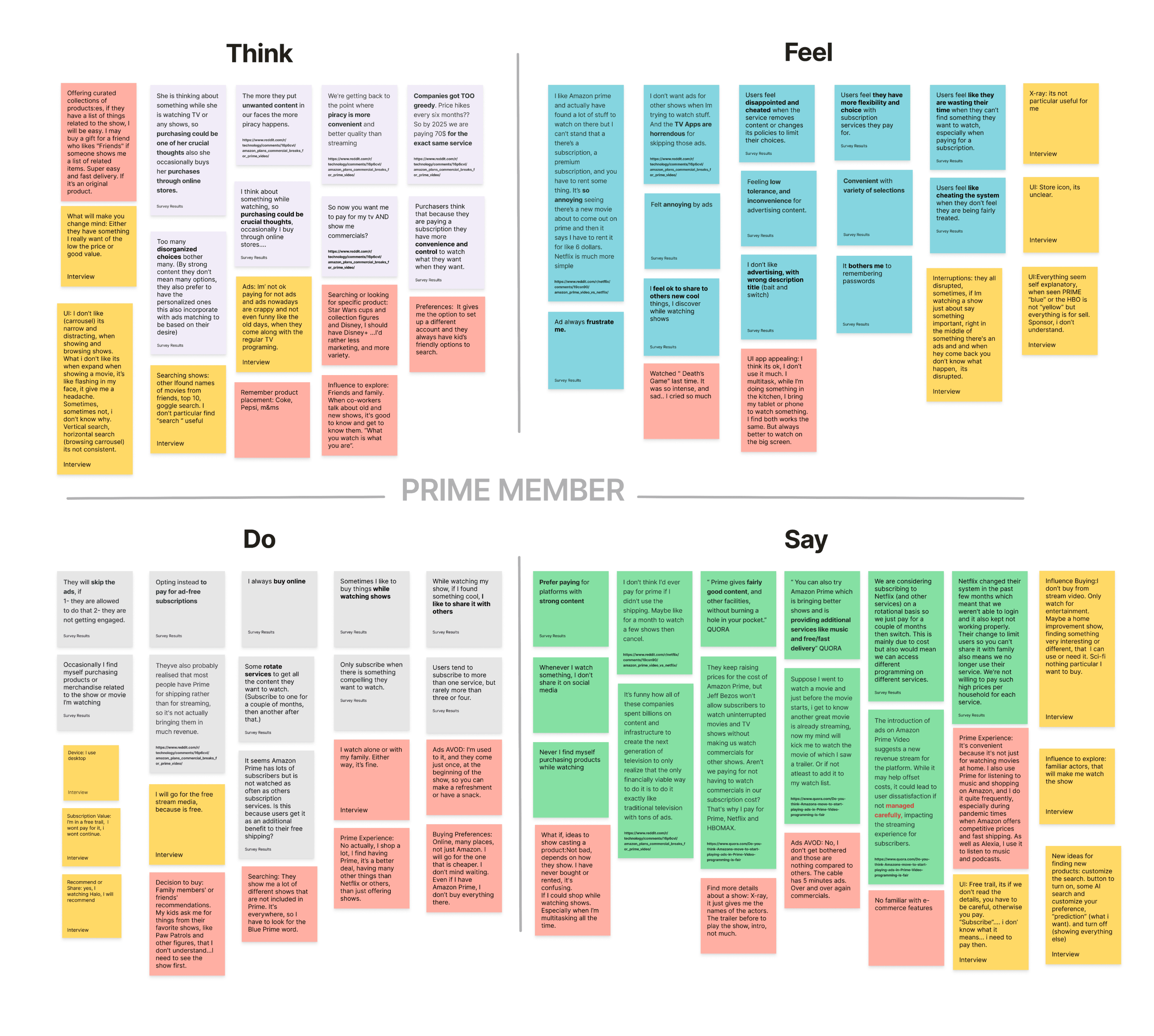
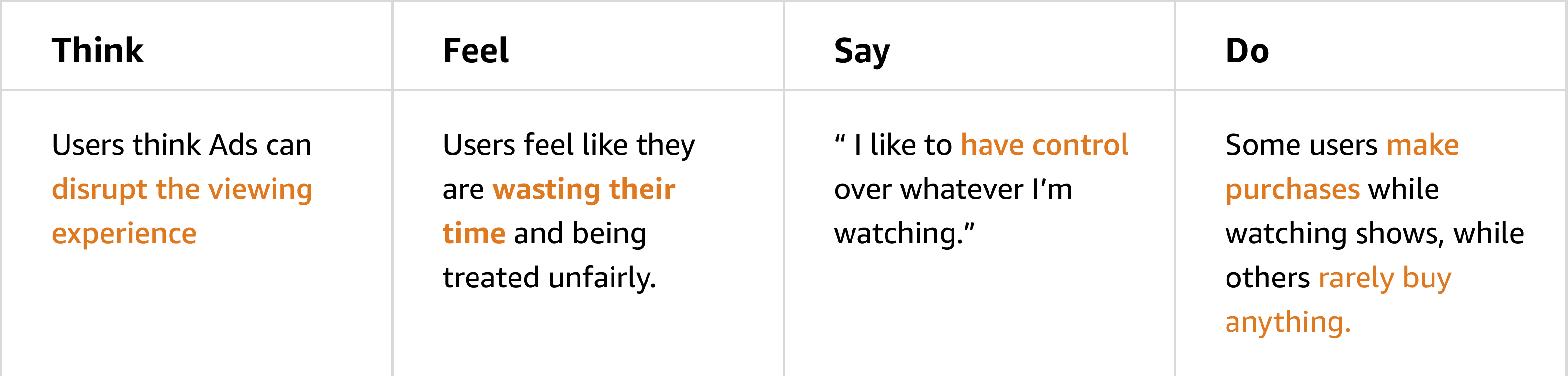
What do Amazon Prime users Think, Feel, Say and Do?
This process helps us better empathize with users' experiences and preferences, guiding our product development efforts and persona creation.
Persona Definition
Designing for a global user base
Designing for an extremely large diverse user base like Amazon Prime is challenging:
The typical user is ‘everyone’
We decided to focus on a subset of the market with a strong desire to purchase, based on our research
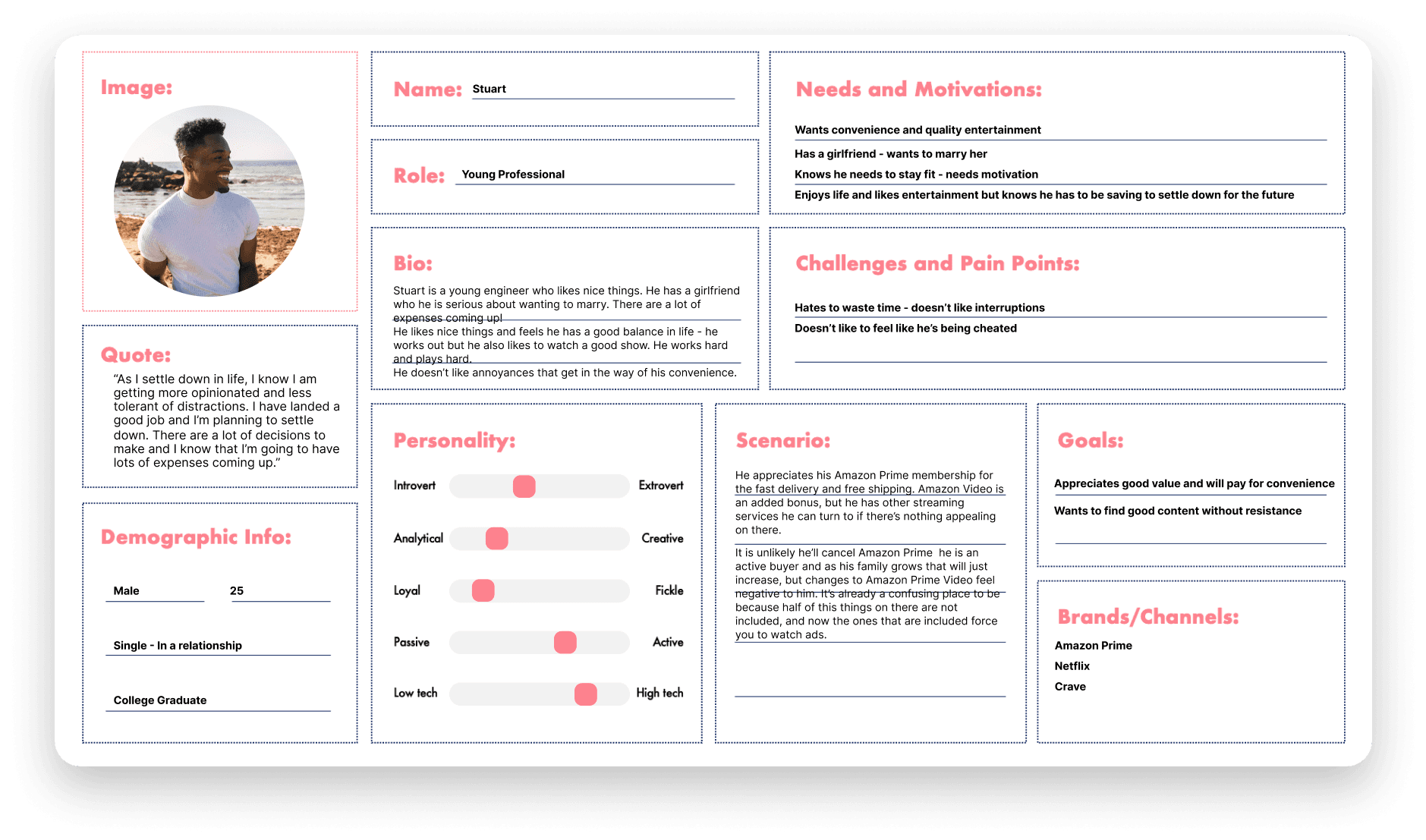
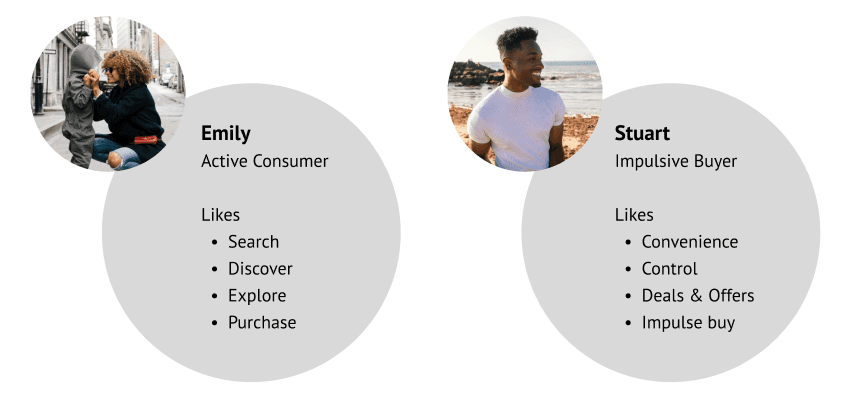
a Millennial mother (Emily) and a GenZ male (Stuart)
Emily prefers traditional eCommerce app experiences
Stuart values control of interactive experiences on his phone
The design process involved exploring two flows based on these personas and analyzing their synergies and differences.
Our Personas:
Emily and Stuart
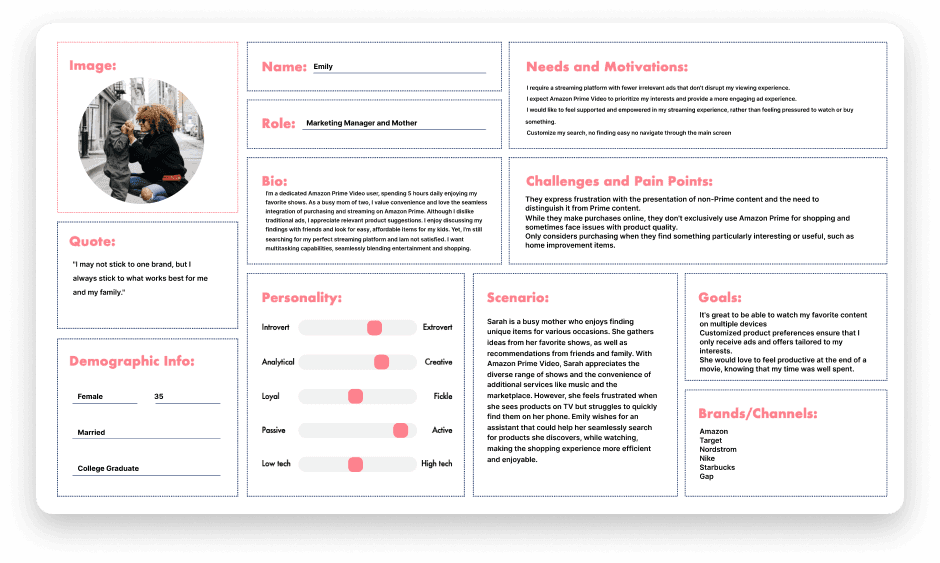
Key Persona Characteristics
Pain Points
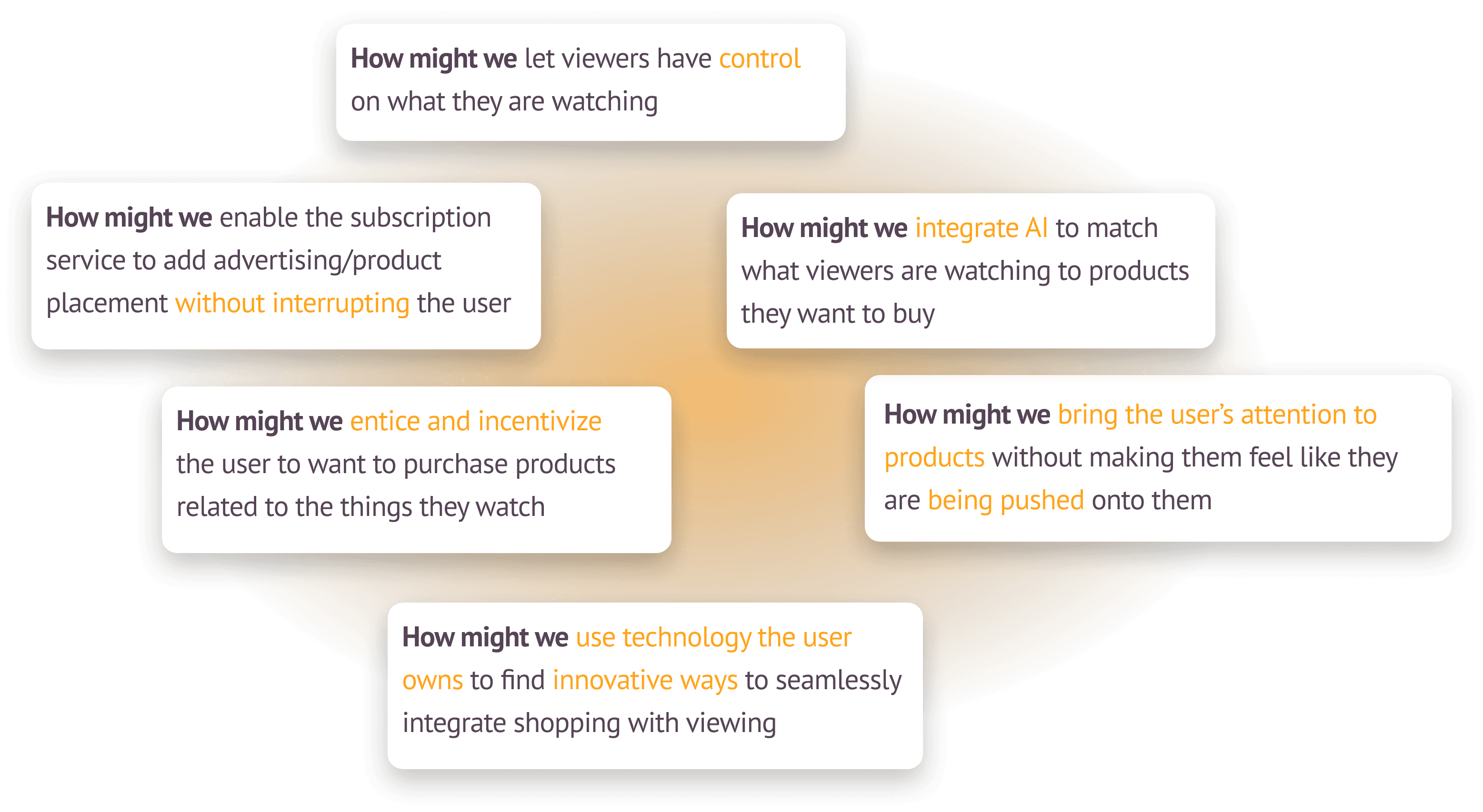
Unwanted interruptions: Full-screen, un-skippable ads are not working for them
Lack of Control: Users pay subscription services for choice and convenience to watch what they want, when they want
Frustration at rising subscription costs without getting any more advantages
Feeling of getting forced to do something which is not their choice
The Problem Statement
How Might We...
Ideate
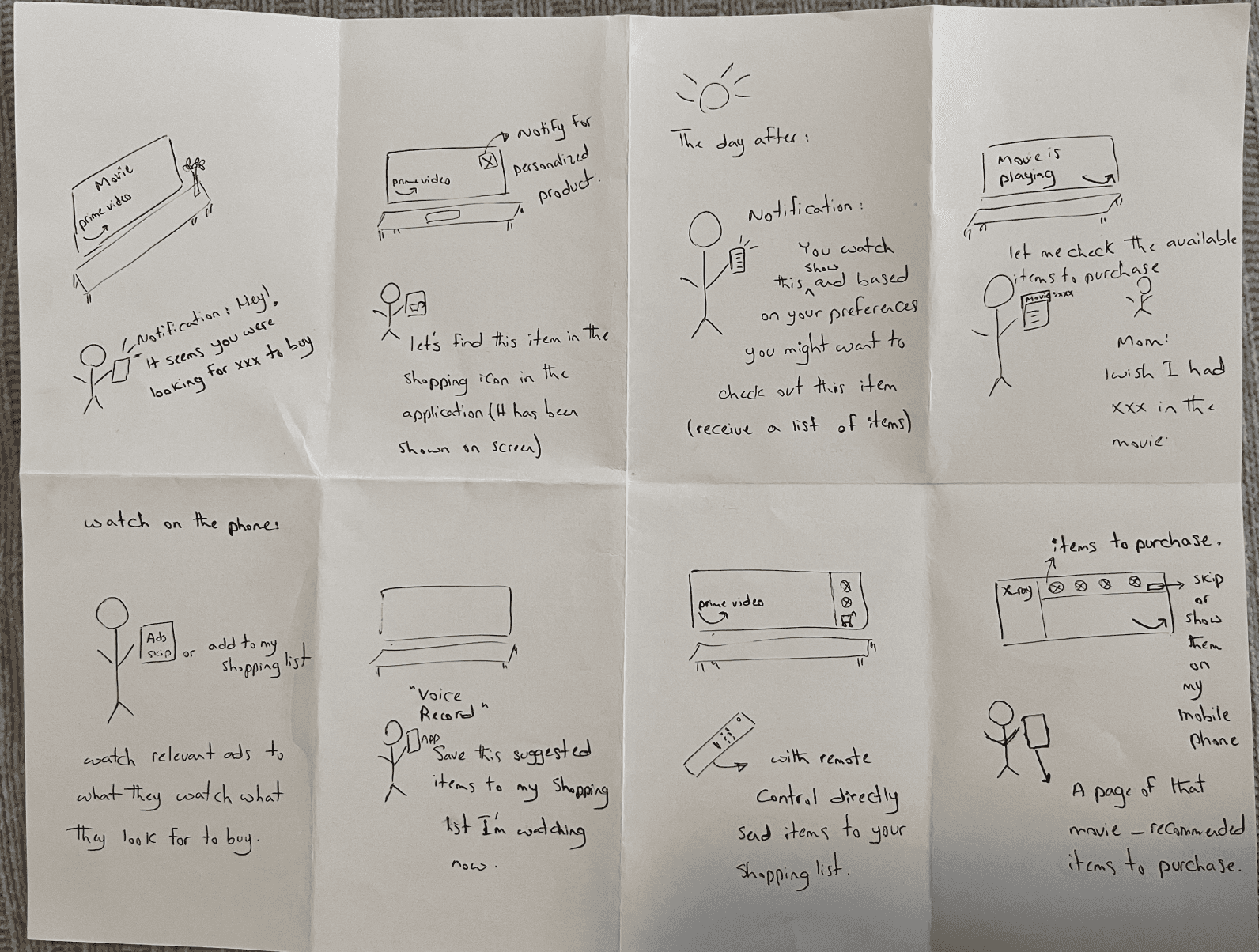
Crazy 8’s
We conducted a Crazy 8’s exercise, identified common themes and listed popular functions, then utilized a voting system to ensure team synergy.
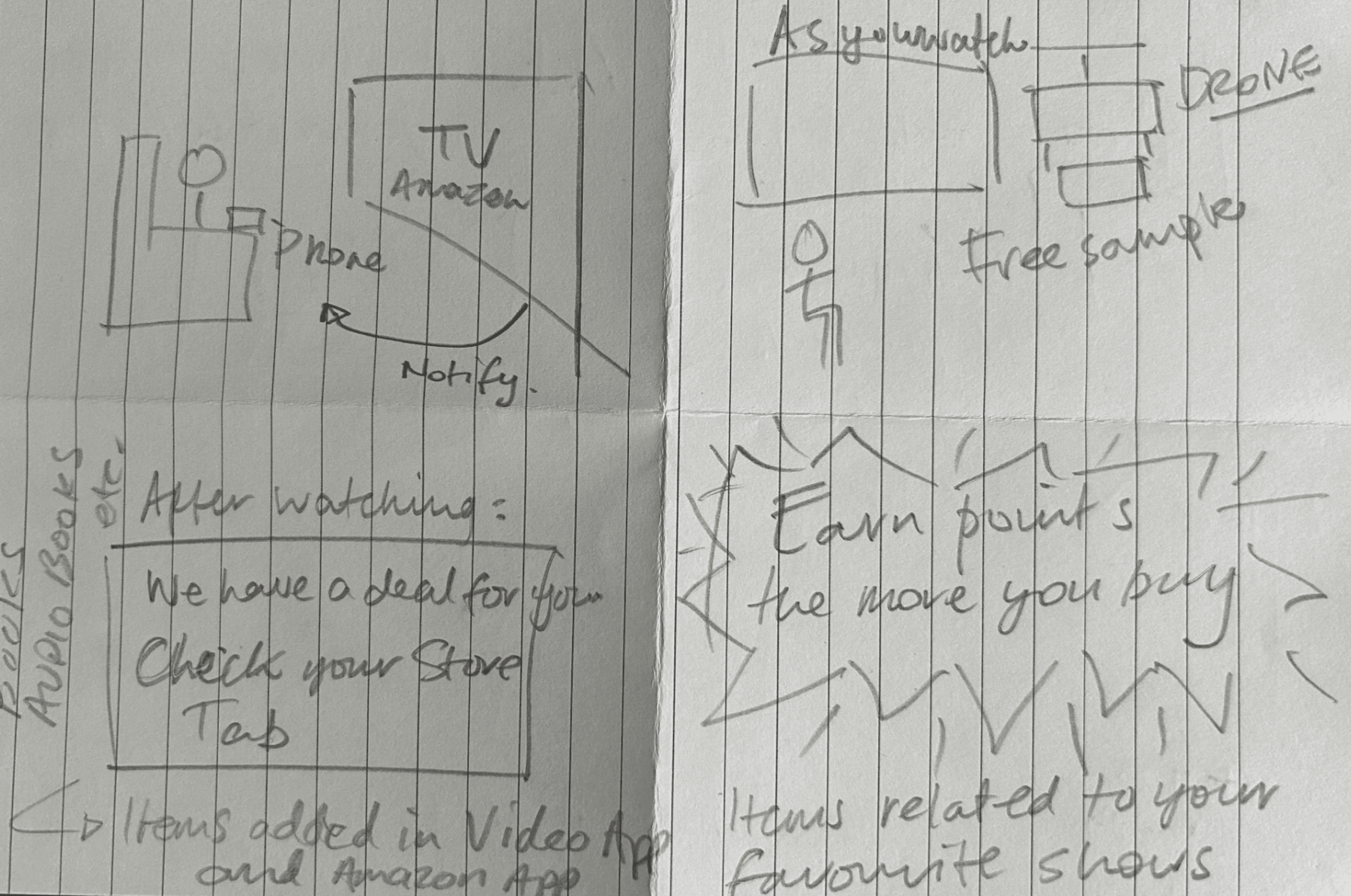
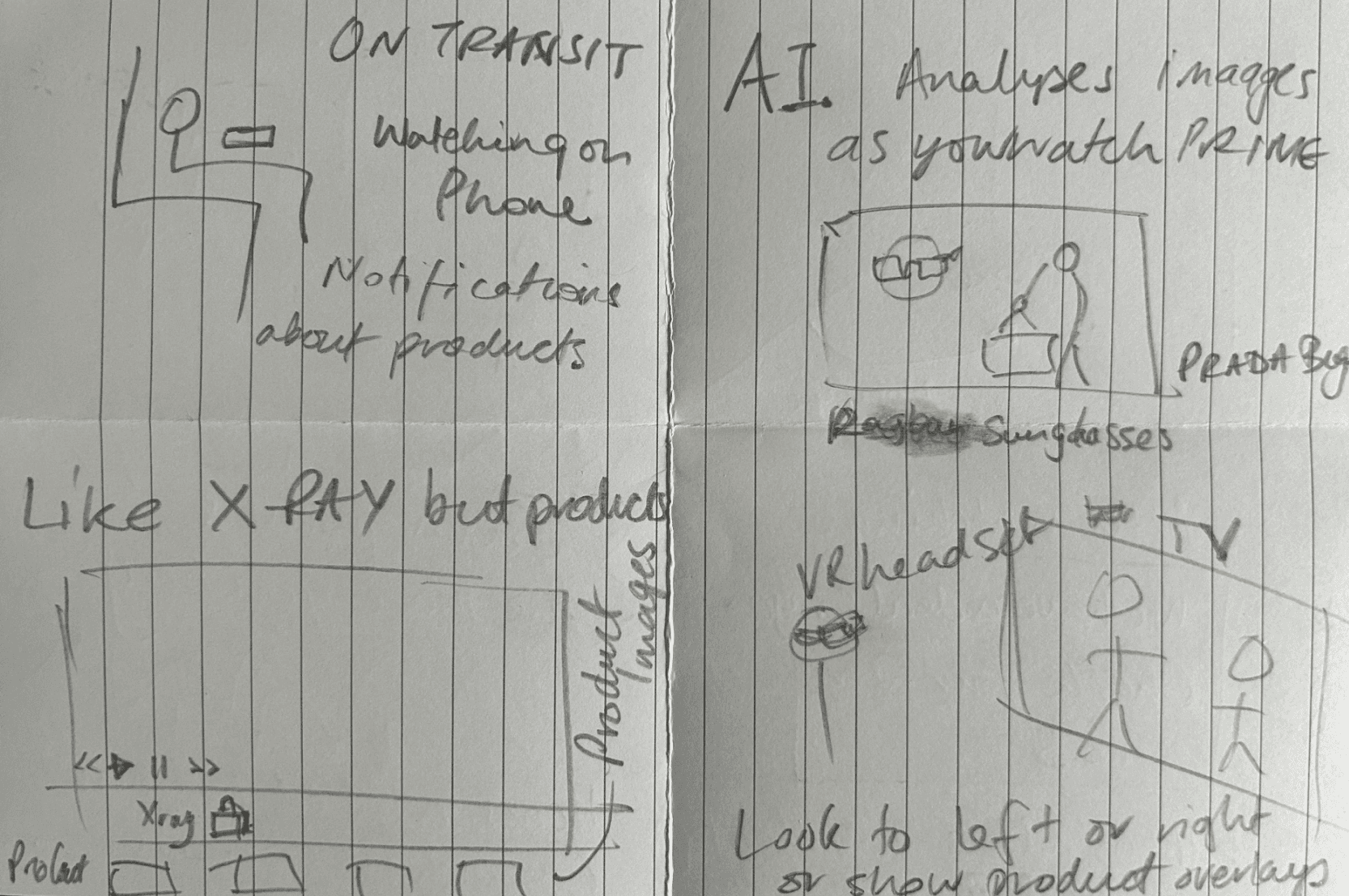
Using mobile phone to control TV
AI search for products on screen
Points for buying merchandise
Push product suggestions & offers to user after watching show
X-Ray like feature focusing on product placement
VR Headset place ads and products beside the screen
Product notification products based on shows
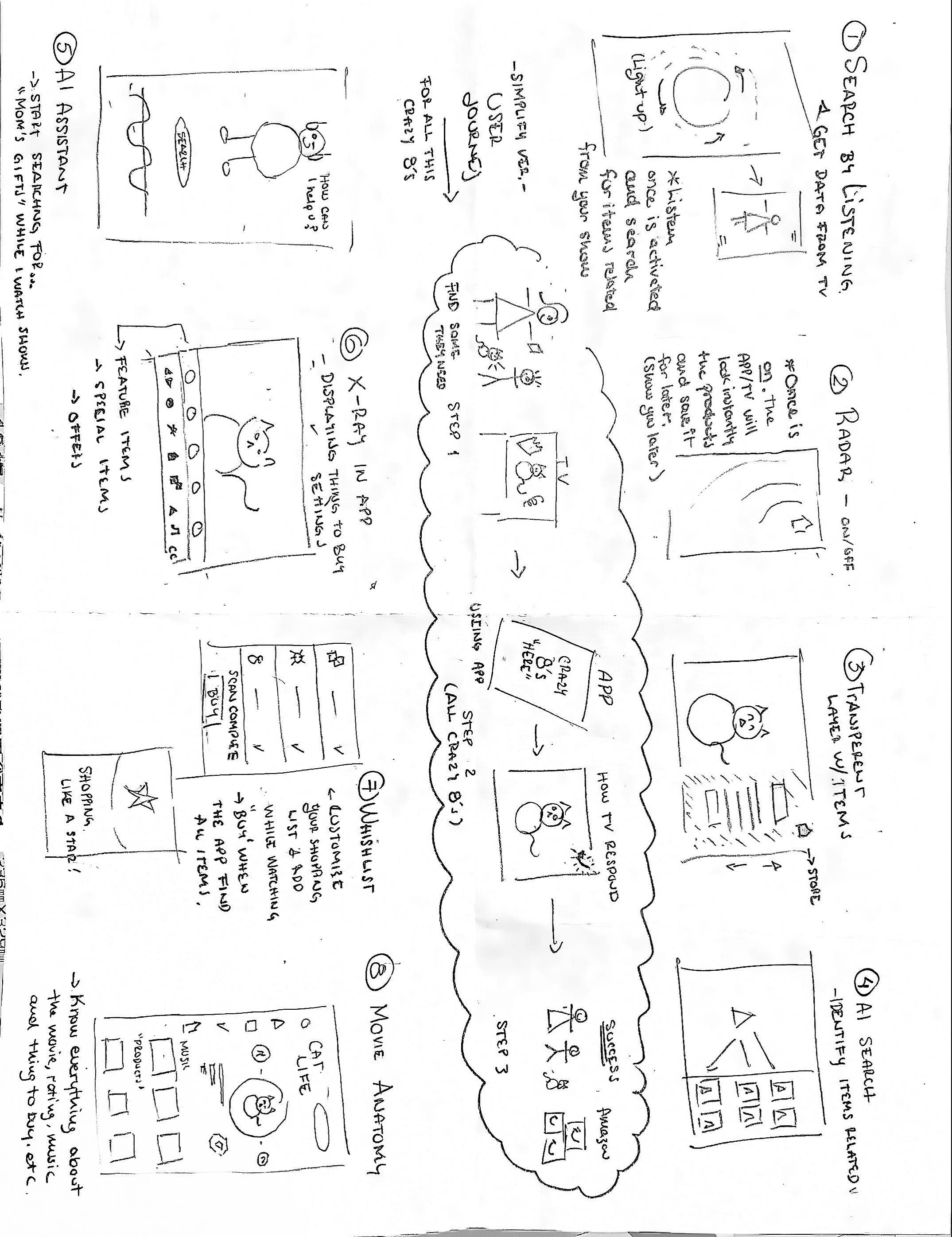
AI Assistant
Search by listening
Radar
Movie Anatomy
Notified later using AI search
Search with remote control device
Search with voice recognition
Movie anatomy
Feature selection
These are the features we chose to expand and explore:
A companion mode to help users seamlessly find products featured onscreen while watching shows
A new feature to help users find & purchase products instead of pushing ads at the user
Integrated AI image search to find items in the Amazon catalog similar to those seen on screen
Seamless vendor push of related product deal suggestions to the user
Wireframes
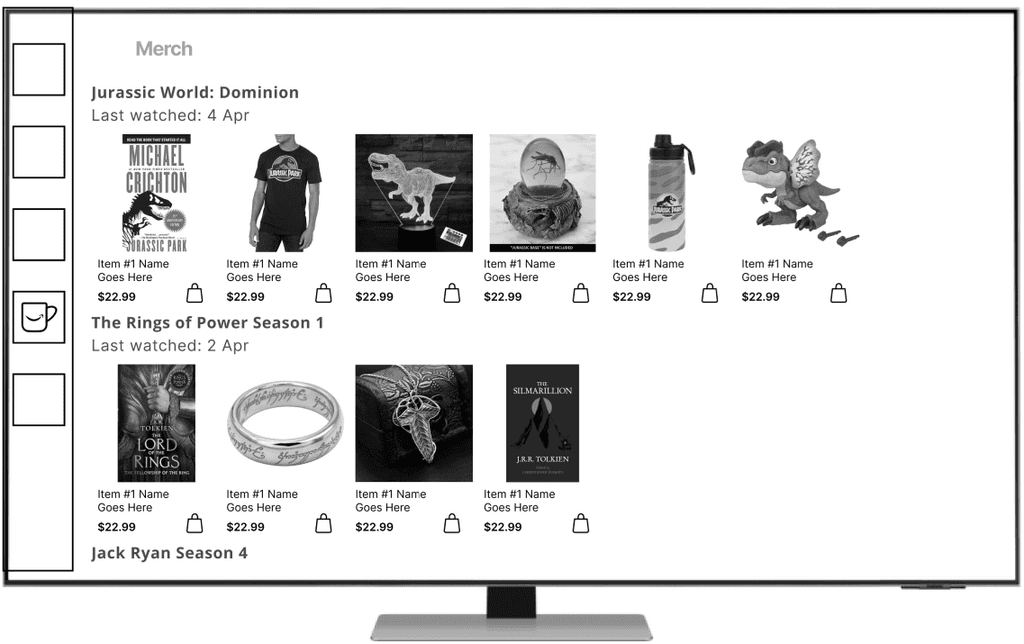
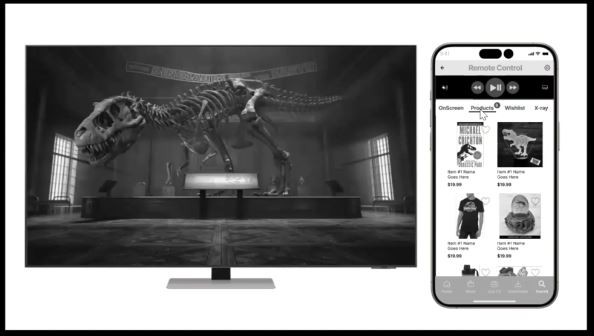
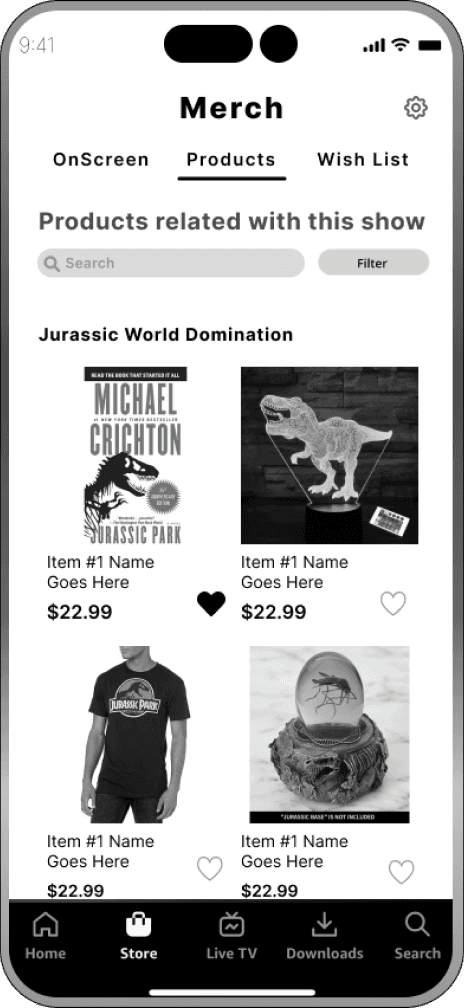
We developed wireframes of the mobile interface and the TV app. This is where the concept of Amazon Merch was born.
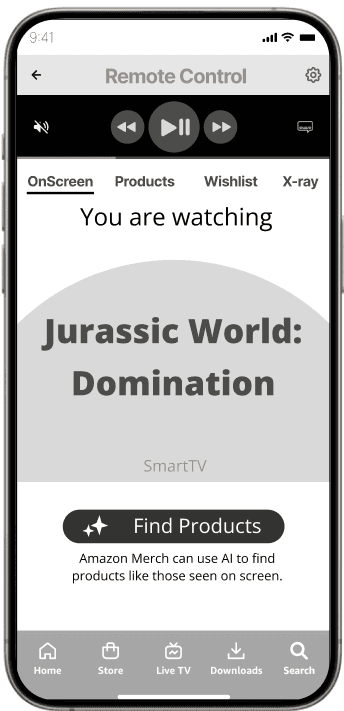
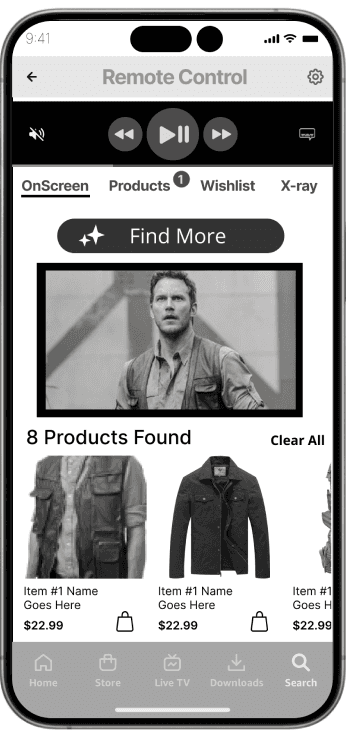
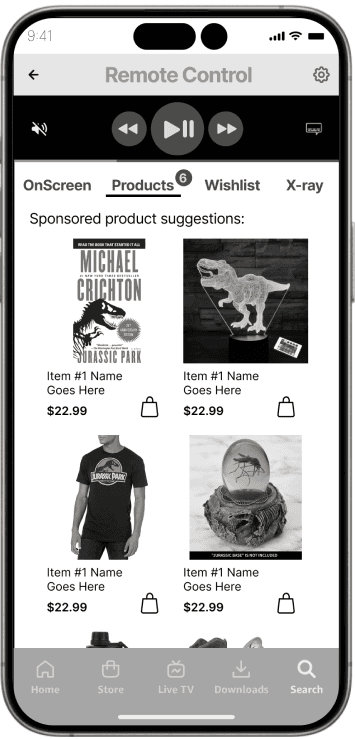
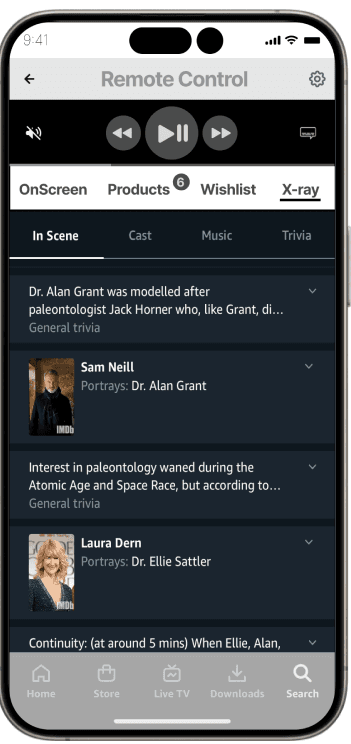
Here's a very rough wireframe of the TV interface, showing how merchandise can be associated with the user's viewing history.
Prototype & Test
Usability Test
Through moderated tests with 8 participants, we analyzed the effectiveness of our two flow prototypes:
Live experience while watching a show
Mobile purchasing experience after watching a show
Goals
The testing is designed to gain insights into user interactions and perceptions, ensuring a seamless and satisfying experience.
Participants
8 Amazon Prime Video members
Task
Open the Amazon Prime Video app, and find the new feature called “MERCH” to explore interesting topics and products related to the show.
Explore topics related to the show.
Find a product or item that interests you within the show.
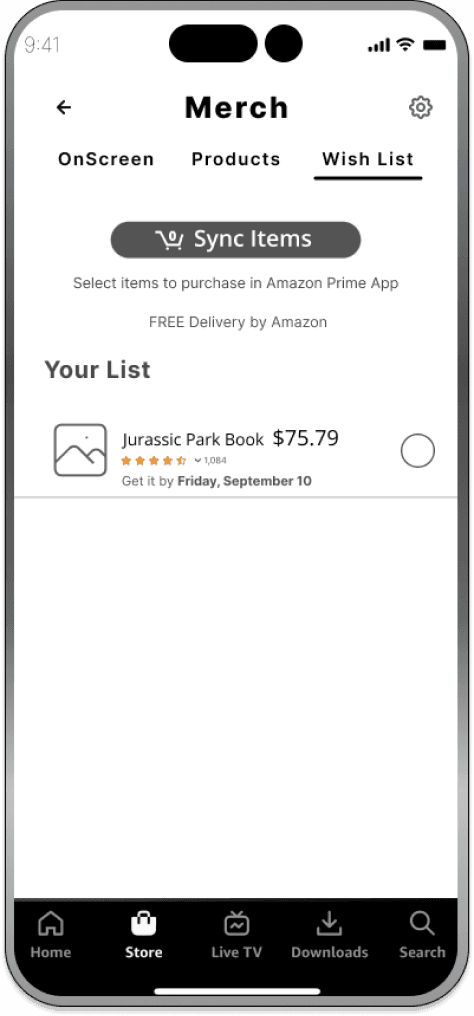
Add the item to your wish list.
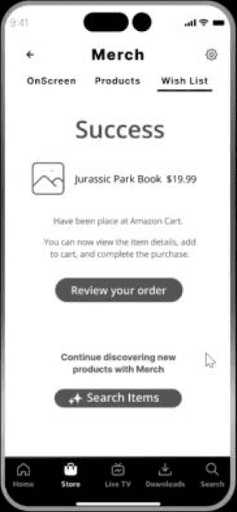
Purchase the product
Usability Feedback
What aspects of the prototype do you think work particularly well, and what areas could be improved?
Is there anything specific that would make you more likely to use the product in the future?
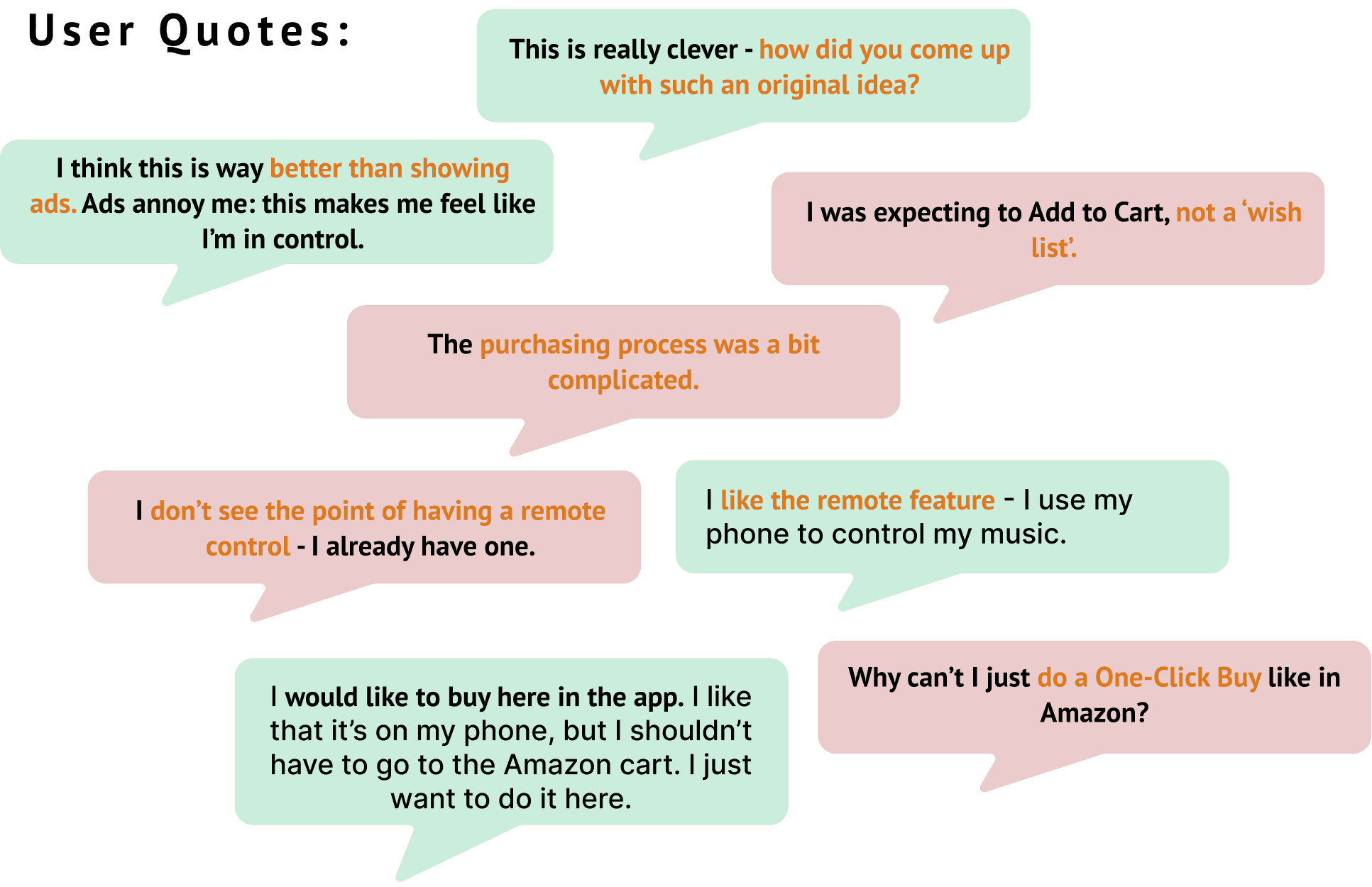
Success Metrics
We tracked the metrics of the testing, and also asked questions of the users after each test session.
Test Results
Testing identified that the task was not as intuitive as we might have thought. Users found the goal hard to achieve and made assumptions about the interface and the instructions we could not have predicted.
Iteration
Brand Design
I created the Amazon Merch brand design to be immediately identifiable as part of the Amazon brand family. It feels friendly and cozy, like a warm, cheerful mug of hot chocolate!
Icon Evolution
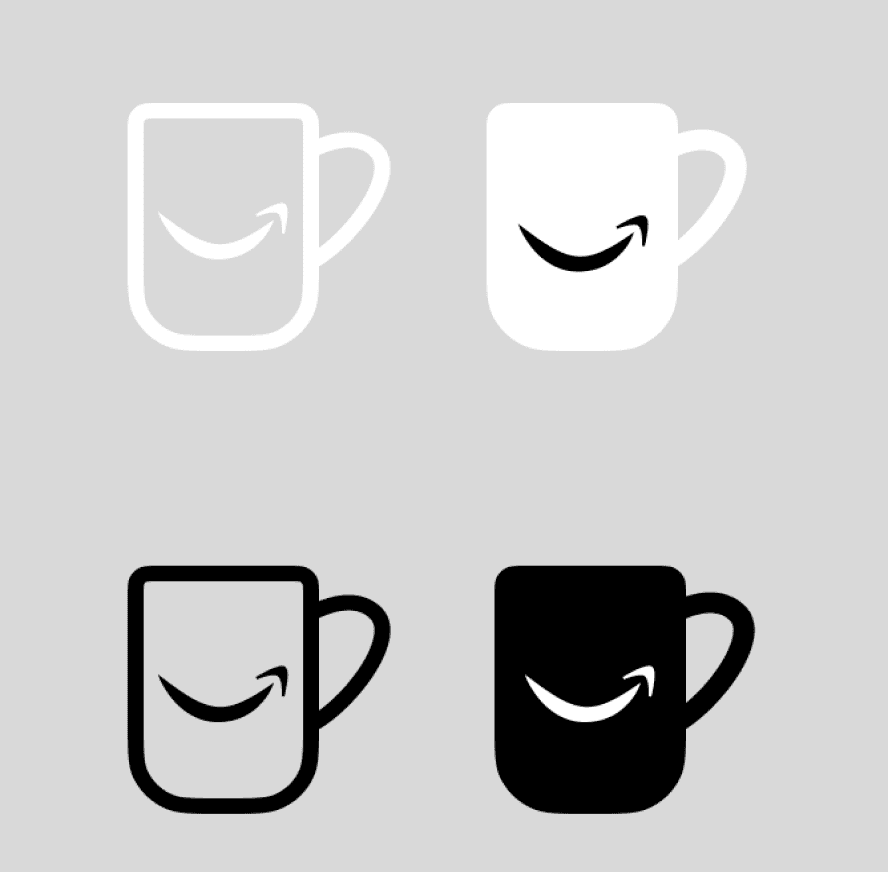
The initial idea for the Merch icon was to create a currency symbol like a dollar sign but using an M. On reflection this started to feel busy and did not scale down well as more elements were included.
We really liked the idea of a mug, as merchandise is stereotypically a branded mug, pen or T-Shirt. The 'a-ha' moment came when adding the Amazon 'swish' arrow to complete the look. It just felt right!
Fun, clean, simple and appealing - and it fit right in with the brand.
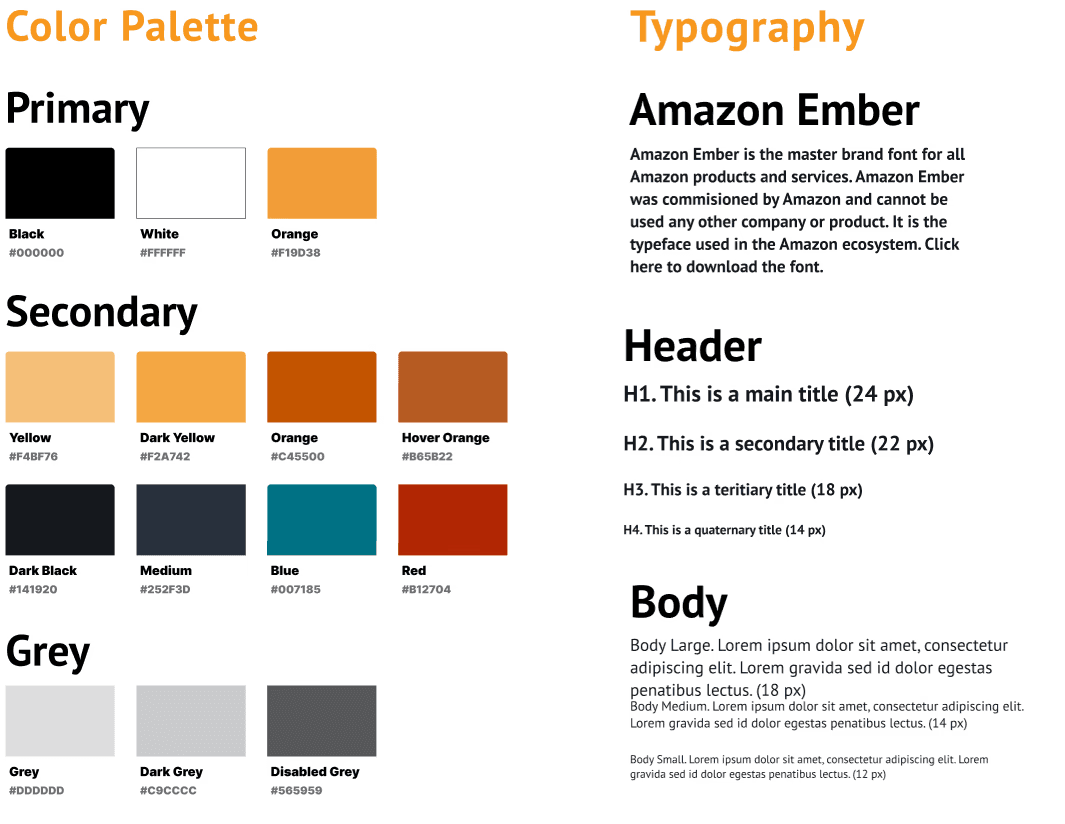
Design System
Interface Design Commentary
The design of the app is intended to work to serve two user scenarios:
When browsing their viewing history for suggested products related to the shows they have watched
Simultaneously when watching a show on the Prime TV app
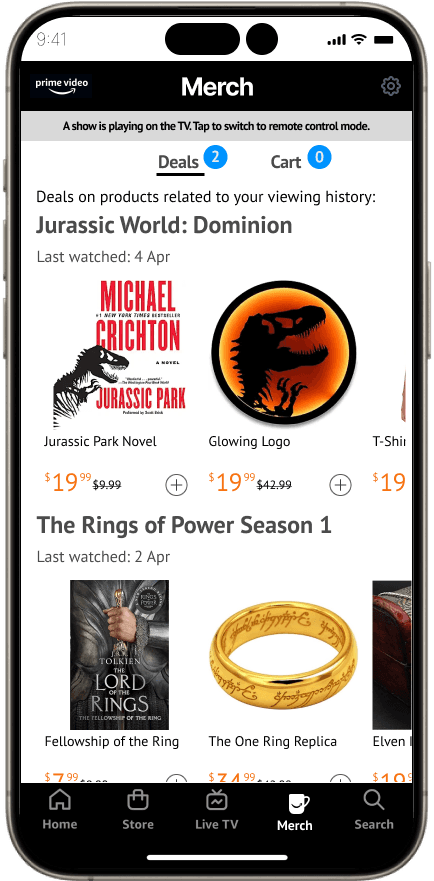
Linking the product deals to the viewing history creates a cognitive association. Users can come here to resume viewing and get distracted into buying on the way!
Merch Feature mode
One might expect to find Merch in the store, but the Store is for the purchase of streaming content. Merch is a new feature, so it should be dominant in the interface. It is given it's own place in the toolbar.
Merch shows the user's viewing history and associated merchandise. Product sponsors can push deals to the user, including product placement items.
User Psychology
We discovered:
users often want to go back to what they were watching
they cognitively remember what they were watching recently.
Putting ourselves into the minds of our users, these are some thought patterns they might have:
"Remember that show we watched last week - did we watch the last episode?"
"Perhaps I can get gift ideas for my daughter based on that show she was watching?"
"I never did read the book - look it's on sale."
"That collectors item would look really cool on my home theater display shelf."
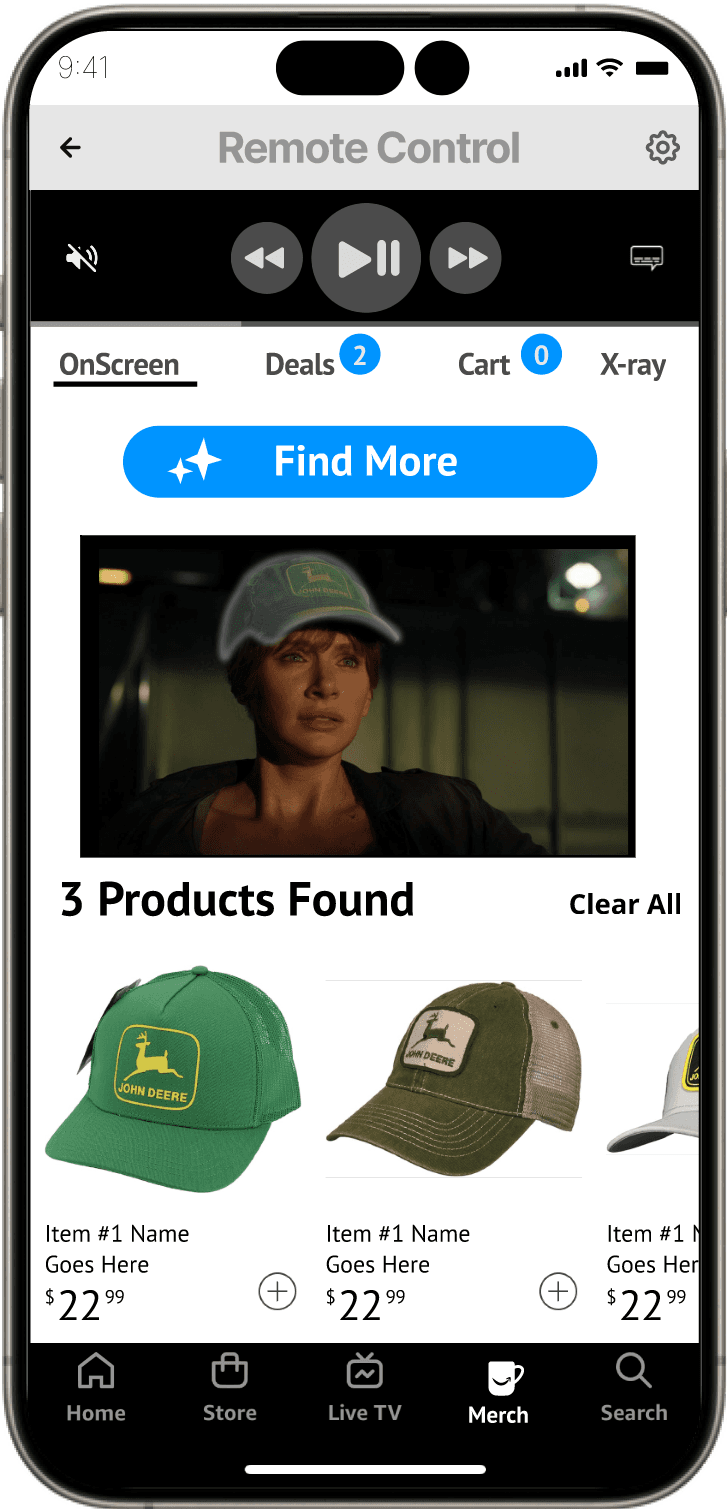
Adding a control feature to Merch gives the users a reason to be here while they watch their favorite shows. It also creates a way to push special deals to the user.
Reflection
On reflection I realized the great potential for a more human centered product promotion model than traditional advertising.
So many opportunities to discover new things in iterations to come!
Learnings
Different classes of user have different expectations of technology:
Some are completely comfortable with an integrated experience
Some use one device at a time for a specific purpose
Some (typical younger generations) multi-task and have several devices at their fingertips
Users get frustrated if the technology does not allow them to recall past experiences
Next Steps
With so many directions we could go in and features we could explore, we would:
Determine which features are worth pursuing by doing extensive user research to determine what appeals to whom
Refine features and integrate them more smoothly into the prototype
Do extensive user testing and get detailed feedback
High Fidelity Prototype Demo
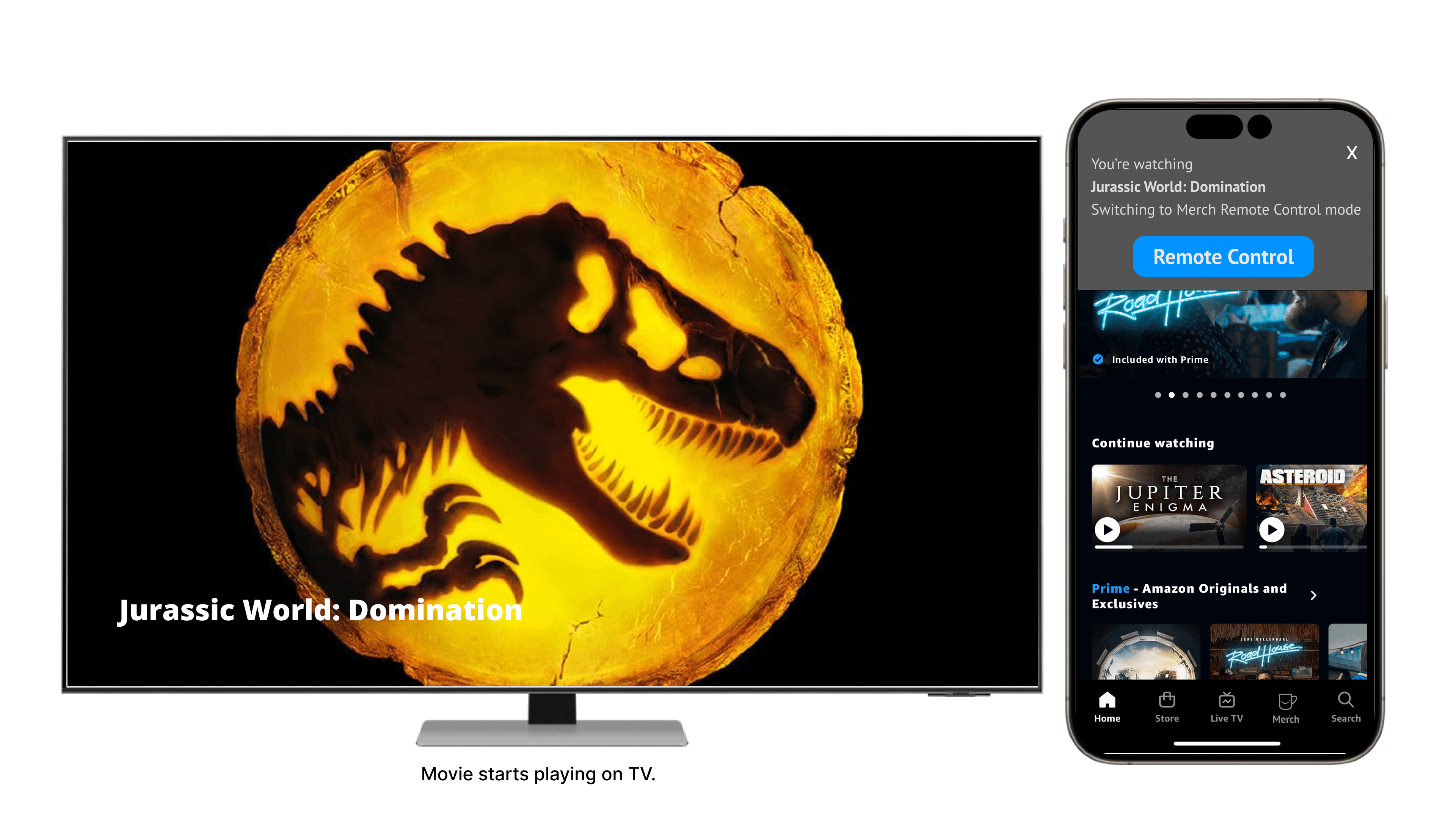
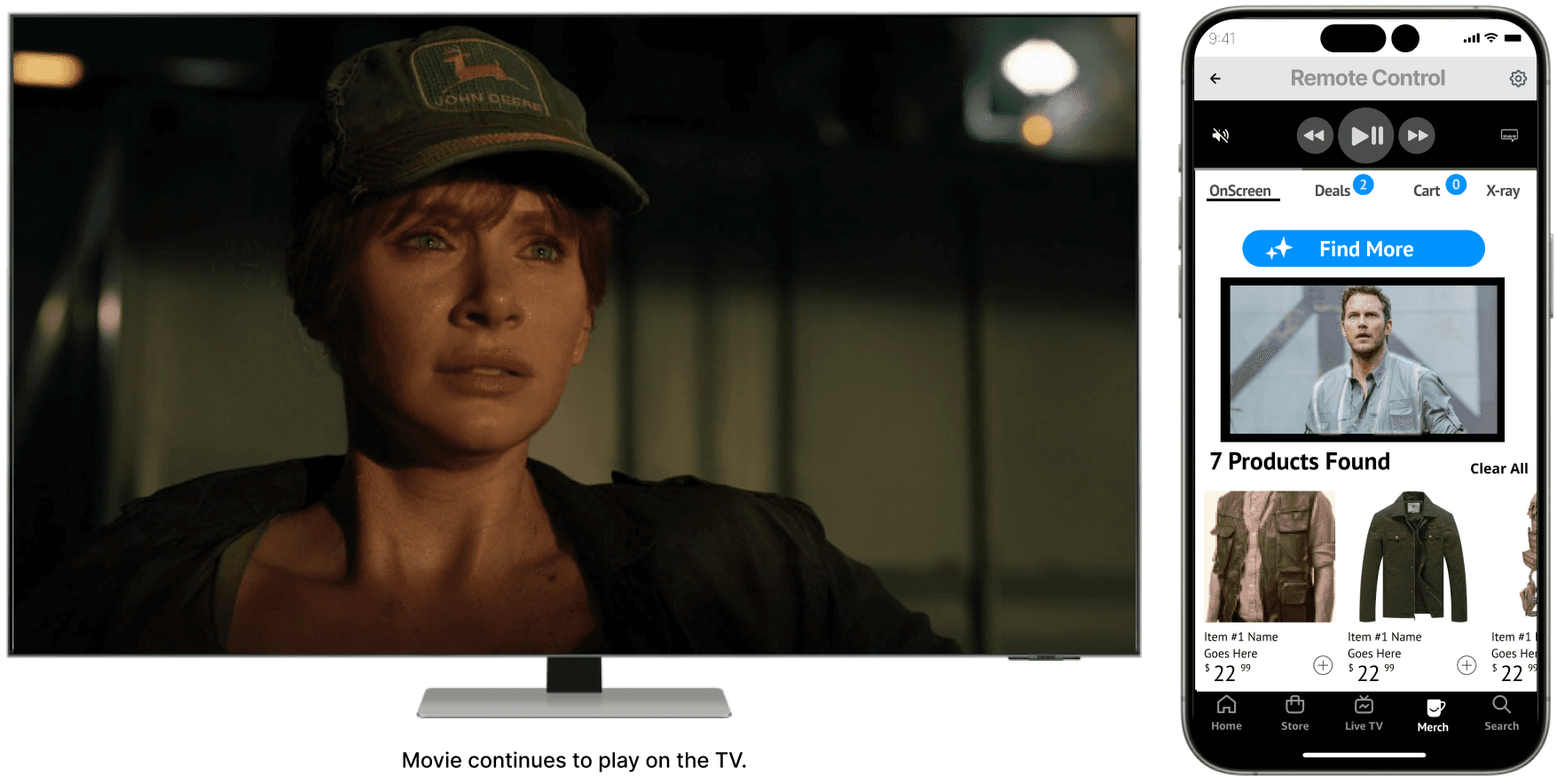
In the prototype I took a novel approach because I wanted to show the interaction between the mobile app and what was happening on the TV screen: